The Glass Office Paradox: Solving Echo in Transparent Architecture
In the world of modern architecture, glass is king. It represents transparency, floods workspaces with natural light, and creates the sleek, "open" aesthetic that defines the 21st-century office. From floor-to-ceiling partitions to glass-walled "Zoom rooms," the visual appeal is undeniable.
However, there is a hidden cost to this aesthetic: The Glass Office Paradox. While glass makes a space feel open and connected, it creates an acoustic environment that is closed-off and chaotic. Because glass is a rigid, non-porous surface, it reflects nearly 100% of sound waves. The result? Excessive reverberation, "flutter echoes," and a significant drop in speech intelligibility.
If your beautiful new glass-fronted boardroom sounds like a cavern, you aren’t alone. Here is how to solve the paradox without sacrificing the view.
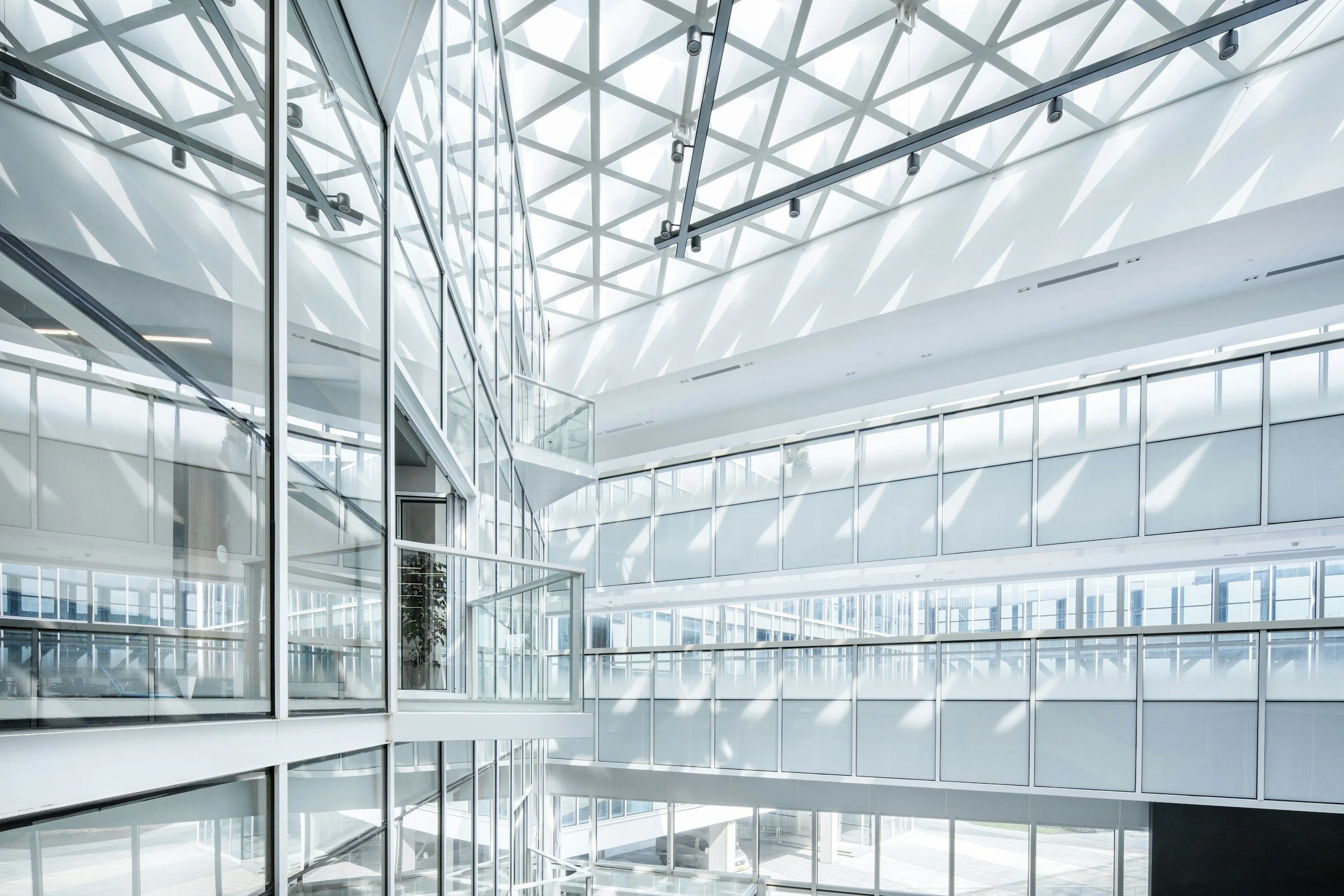
The Science: Why Glass is an Acoustic Nightmare
Sound behaves much like light. When it hits a hard, flat surface like a glass partition, it doesn't get absorbed; it bounces. In a room with parallel glass walls, sound waves ping-pong back and forth (flutter echo), creating a "ringing" sound that makes it difficult for microphones to pick up clear audio and for humans to focus.
In many modern fit-outs, the "standard" fix—mounting acoustic panels to the walls—isn't an option because it would block the very transparency the glass was installed for. This is where strategic, non-invasive acoustic design becomes essential.
Strategic Solutions for Glass-Heavy Offices
Solution 1: Reclaiming the "Fifth Wall"
When your walls are glass, your most valuable acoustic real estate is the ceiling. By treating the "Fifth Wall," you can intercept sound waves before they have a chance to bounce off the floor and glass partitions.
Acoustic Baffles: Our PetFelt Ceiling Baffles or Beams are a favourite for glass-heavy offices. Because they hang vertically, they have a massive surface area to "catch" sound from multiple angles. They provide Class A absorption without obstructing the flow of light from windows.
Ceiling Rafts: For localized sound control—such as above a glass-walled meeting table—Acoustic Rafts are incredibly efficient. Because they are suspended with an air gap, they offer "double-sided" absorption, catching sound on the way up and the way back down.
Solution 2: Softening the First Reflection Points
Even in a glass room, there are usually small sections of solid wall or floor space. Targeting the "first reflection points"—the spots where sound hits first after leaving a person’s mouth—is key.
Acoustic Zoning: Use PetFelt Screens or Privacy Partitions to break up the path of sound between glass zones.
Strategic Placement: Placing a high-performance PetFelt panel on the one solid wall in a glass room can reduce the overall reverberation time (RT) by up to 40%.
Solution 3: Sustainable Style with PetFelt
Solving the paradox shouldn't mean cluttering your design with ugly foam. Modern acoustic solutions like PetFelt are made from 75% (minimum) recycled plastic bottles, offering a tactile, matte finish that provides a beautiful "biophilic" contrast to the cold, hard surface of glass.
Available in over 60 colours, these panels can be custom-cut into geometric shapes or branded designs that complement the architectural intent of the building rather than hiding it.
The Result: High-Definition Architecture
Acoustics shouldn't be an afterthought or a "fix" for a failed design; they should be the invisible partner to your architecture. By integrating suspended PetFelt solutions, you can keep the transparency and light of your glass partitions while creating a "sound-smart" environment where people can actually hear themselves think.